Fencers in Great Yarmouth, Norfolk
Fencing in Great Yarmouth and the surrounding areas: ask for a free quote and a call back at a time that suits
We cover all kinds of fencing work, large and small. Tell us the job in the short form and pick the call back time that suits you best. At your chosen time a local fencer calls you with a free quote. It costs nothing to ask.
- Fences built to cope with strong coastal wind
- New fences, single panels, posts and gates all welcome
- Great Yarmouth, Gorleston, Bradwell, Caister and the villages
- No fee for a quote, and you choose when the call comes
Fence panels that blow down in the wind
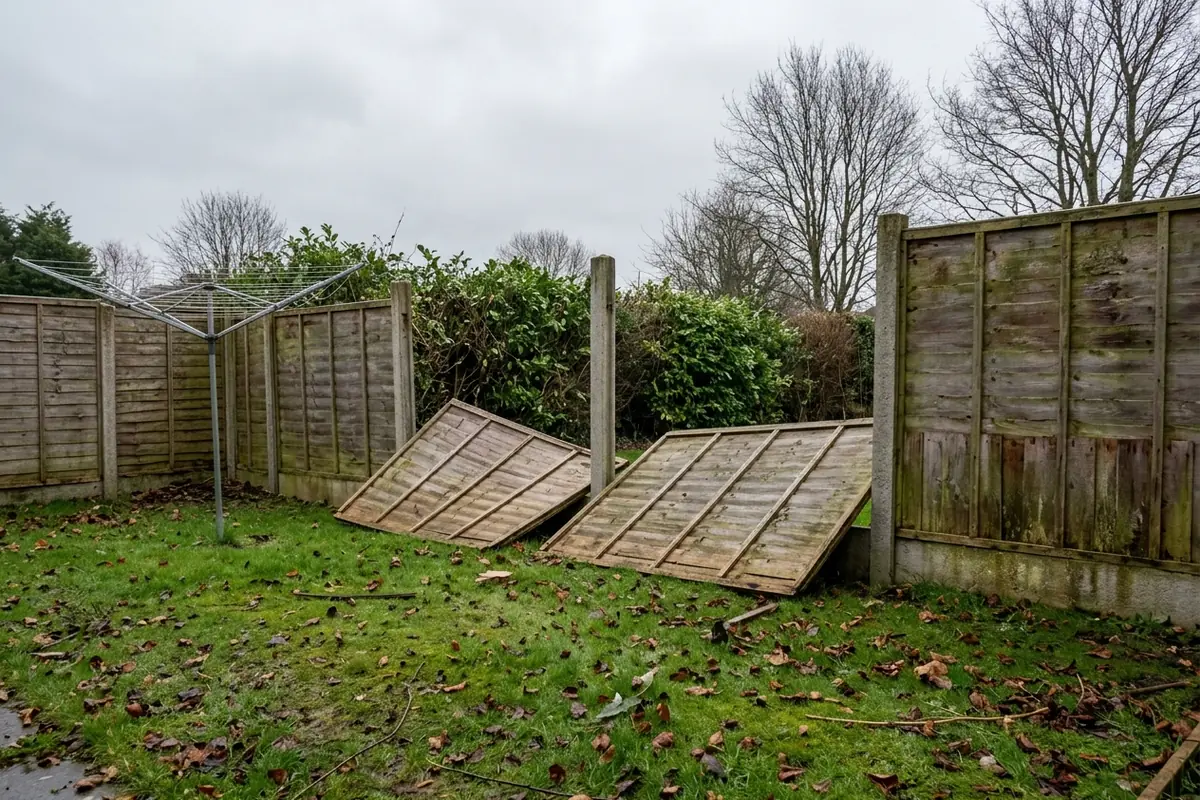
You hear it in the night. A bang, then a scrape. In the morning a fence panel is lying on the grass and next door can see straight into your kitchen.
So you wedge it back. A length of rope, a couple of screws, a paving slab against the bottom. It holds until the next easterly, and then it is down again, this time with a post leaning after it.
Meanwhile the dog is out through the gap, the garden feels overlooked, and the whole run looks tired from the street.
A fence on this coast has to be built for the weather it gets. Put the job and your part of town in the short form. A local fencer will ring you, look at what is there and give you a free quote for putting it right.
How to get your free quote in three steps
Describe the fence
Give your name, a phone number and the part of town you are in. Then say what is wrong or what you want built. A rough length in metres or a count of panels is the most useful detail.
A local fencer phones you
Your phone rings at the time of day you picked. Expect questions about height, posts and access to the garden. For a new run of fencing, the fencer will usually want to walk the boundary and measure it.
You get a price and choose
The price is yours to weigh up. Ask for it written down with the materials listed. Accept it, turn it down or sleep on it. You have spent nothing by asking.
Why wind damages fences in Great Yarmouth
Great Yarmouth sits on a spit of land about three miles long, with the North Sea on one side and the River Yare on the other. Breydon Water lies just behind the town. Gardens here have little shelter from the wind.
The wind here is strong. In the Great Storm of 1987, Gorleston recorded the highest wind speed in the UK that day, at 122 miles an hour. A wind farm of 30 turbines stands on Scroby Sands, about a mile and a half off the beach. Turbines go where the wind is steady and strong.
A solid six foot panel gives the wind a large flat surface to push on. Each gust pushes on the whole face of it, and the push ends up at the foot of the posts. That is where a tired fence lets go.
- Posts rot at ground level. Timber posts fail where damp soil meets air. They can look sound above and be soft and rotten below.
- Thin panels shake loose. Light overlap panels flex in the wind until the slats work free of the frame.
- Fixings rust. Salt in the air eats plain steel nails, clips and hinges faster than it would inland.
- Shallow posts rock. A post that was never set deep enough works a wider hole each winter.
None of this is bad luck. Each has a known cure, and a fence built with the coast in mind will see out many winters.
Fencing jobs you can ask about
Put any of these in the form. Each has its own page with more detail and typical prices.
- **Fence panels.** A new run of panels, or tired ones swapped between posts that are still good.
- **Closeboard fencing.** Heavy feather edge boards on rails, built on site. The strong choice for an exposed garden.
- **Fence repairs.** Panels blown out, boards snapped, a run that leans after a storm.
- **Fence posts and gravel boards.** Rotten timber posts replaced, concrete posts and gravel boards fitted.
- **Garden and driveway gates.** Side gates, pairs of drive gates and electric gates.
- **Composite fencing.** Boards that need no painting and do not rot.
- **Metal and security fencing.** Railings, chain link, mesh panels and palisade for homes, yards and sites.
What keeps a fence up in a gale
Six things decide how long a fence lasts out here. A good fencer will talk you through each one without being asked.
Posts set deep
The post does the real work. For a six foot fence the usual rule is an eight foot post with about two feet of it in the ground, set in concrete. In soft or sandy ground a fencer may go deeper or dig a wider hole.
Concrete posts, or timber that is protected
Concrete posts do not rot, which is one reason they are so common on exposed boundaries. Timber posts look softer and cost a little less. If you choose timber, ask how the foot of each post will be protected from damp.
Gravel boards along the bottom
A gravel board is the strip that sits between the soil and the timber. It keeps the panel off the wet ground so the bottom edge does not rot. It also closes the gap a small dog would otherwise dig under.
Heavier boards
Closeboard fencing is made of thick overlapping boards nailed to rails. It weighs more and flexes less than a thin panel. On a boundary that faces the sea or an open field, it is usually worth the extra.
Letting some wind through
A fence with gaps, such as hit and miss or slatted panels, lets part of the gust pass. The load on the posts drops. You give up a little privacy and gain a fence that strains less.
Fixings that do not rust
Ask for galvanised or stainless steel nails, screws, clips and hinges. Near the seafront it matters more than anywhere. Our guide to fences for a windy coast goes into all six.
Typical fencing prices at a glance
These are UK guide prices for the jobs people ask about most.
| Job | UK guide price |
|---|---|
| New timber panel fence, 10 to 15 metre garden | £1,200 to £1,800typical about £1,500 |
| Replacing one wooden fence panel | £110 to £220 |
| Re-setting or replacing a fence post | £160 to £265 |
| Composite fencing, 15 metres, installed | £1,250 to £1,900 |
| Garden gate, fitted | £175 to £750typical about £400 |
| Electric sliding gate, installed | £2,500 to £6,000typical about £4,250 |
Typical UK guide prices from published UK cost guides. A fencer who has seen your boundary will give you the real figure. Height, length, the kind of post and the state of the ground all move the price for your own fence.
For closeboard fencing by length, old fence removal, staining and steel fencing, use the fencing cost calculator.
Which side of the fence faces out
A fence has two faces, and one of them is your neighbour's view. Standard panels have a smooth side and a side that shows the frame. Closeboard has a boarded side and a side that shows the posts and rails.
People often ask who should get the smooth face. The planning guidance we read sets heights and is silent on which way a fence must face. In most cases it comes down to courtesy and whatever your deeds say. Plenty of owners turn the smooth side outwards. Others keep it for themselves. A quiet word over the fence first costs nothing.
If you want both sides to look finished, there are fences made for it. Hit and miss panels have boards on alternate sides. Double-sided slatted panels and most composite systems look the same from either garden. Our article on whose fence it is and who gets the good side covers ownership as well.
Keeping the dog in
A fence that stops people seeing in will not always stop a dog getting out. Dogs go under more often than over.
A gravel board set a little way into the soil shuts off digging. Closeboard that follows the ground leaves no stepped gaps on a slope. And a gate needs a latch that holds when a paw lands on it. Tell the fencer the size of the dog and how it likes to escape. It is a normal thing to plan a fence around.
Height limits in brief
Most garden fences need no planning permission. The Planning Portal's guidance for England sets two limits. A fence beside a road used by vehicles, or beside the footpath of such a road, can be up to one metre high. Anywhere else it can be up to two metres, measured from ground level.
That is why six foot panels are the usual choice for a back garden. Six feet is about 1.83 metres, so it sits under the limit.
Listed buildings are treated differently, and some estates have conditions that take away the right to put up fences freely. In parts of the borough inside the Broads, the Broads Authority deals with planning. Everywhere else it is Great Yarmouth Borough Council. Read the fence height rules before you order anything tall.
What a fencer charges
Small repairs tend to be priced by the hour or the half day. A whole fence is nearly always priced as one job, with materials.
A UK fence repair guide says fence installers charge £35 to £55 an hour. Its fence installation guide puts fencing labour at £300 to £400 a day, or about £50 to £80 of labour for each panel fitted. The same guide gives £110 to £120 a metre for a typical UK garden fence with materials and labour.
Those are national averages. No guide publishes a figure for Great Yarmouth alone, so use them to judge if a quote is in the right area. Our page on fencing prices in Great Yarmouth sets out the figures in full.
Both sides of the river and up the coast
The Yare cuts the built-up area in two. The town centre and the seafront are on the spit. Southtown, Cobholm and Gorleston are on the other bank. Three lifting bridges join them: Haven Bridge, Breydon Bridge and the newer Herring Bridge, which opened to traffic in February 2024. Bradwell runs straight on from Gorleston with no real gap between the two.
Up the coast are Caister-on-Sea, Scratby, Hemsby and Winterton. Down it is Hopton-on-Sea, on the way to Lowestoft. Inland are Belton, Burgh Castle, Filby and Martham. Gardens on the seaward side of all of them take the same wind.
Name your area in the form so the fencer who rings is one who works near you. Every place is set out on the areas covered page.
Fencing services in Great Yarmouth
- Fence panelsNew panel fences fitted and tired panels swapped.
- Closeboard fencingFeather edge timber fencing built on site for exposed gardens.
- Fence repairs and storm damageBlown-out panels, snapped boards and leaning runs put right.
- Fence posts and gravel boardsRotten posts replaced, concrete posts and gravel boards fitted.
- Garden and driveway gatesSide gates, drive gates and electric gates hung true.
- Composite fencingLow-upkeep boards that do not rot or need painting.
- Metal and security fencingRailings, chain link, mesh and palisade for homes and yards.
Great Yarmouth, Gorleston and the villages
Fencing help on both banks of the Yare and along the coast north and south of town.
- Town centre, seafront and the quays
- Southtown and Cobholm
- Gorleston-on-Sea
- Bradwell
- Caister-on-Sea
- Hopton-on-Sea
- Belton
- Burgh Castle
- Ormesby St Margaret and Scratby
- Hemsby
- Winterton-on-Sea
- Martham
- Filby and Fleggburgh
Before you send the form
- No fee, and the decision stays yours. There is no charge for sending the form and no duty to accept the price you are given.
- About a minute of your time. Your name, your number, your area and the job. No email address, no street address.
- Prices here are never guessed. Each figure on this site is a typical UK guide price taken from a published cost guide. A guide price helps you budget. It cannot stand in for a price on your own boundary.
- Your details are used for one thing. Getting your fencing looked at. They are not sold and not added to any mailing list.
Common questions
What is the average cost of installing a fence per metre in the UK?
A UK fence installation guide gives £110 to £120 a metre for a typical UK garden fence, with materials and labour. It also gives £1,200 to £1,800 for a 10 to 15 metre garden. Closeboard, composite and concrete posts change the figure, as does taking the old fence away.
How much do fencers charge per hour?
A UK fence repair guide says fence installers charge £35 to £55 an hour. For a full fence most fencers give one price for the whole job, so you know the total before a spade goes in.
Can I ask about a single panel?
Yes. One panel, one post or one dropped gate is a normal job. If a few other bits need doing, list them all so they can be priced as one visit.
Is there a charge for a quote?
No. Sending the form is free, and you can turn down the price you are given.
My fence came down in the wind. How soon can someone look?
Say so in the form and leave the call-back time on as soon as possible. After a big blow every fencer in the area gets busy at once, so the earlier you ask, the nearer the front of the queue you are. Nobody can promise a same-day visit.
Is Gorleston covered as well as Great Yarmouth?
Yes. Gorleston, Southtown, Cobholm and Bradwell are all covered, along with the town centre, Caister and the villages up and down the coast. Just name the place when you fill in the form.
Get the fence sorted before the next gale
A loose panel does not wait for a calm week. Each gale rocks the posts a little further and pulls more fixings free, so a one-panel repair in October can be a whole run by February. A gap in the fence is also an open door for the dog and for anyone passing. After a storm, fencers get booked up fast.
There is no fee for asking. Say what the fence needs and which part of Great Yarmouth you are in.